Plant Microbiome
rdgMendes' Lab
People

PhD Rodrigo Mendes
Head of Research and Development Department at Embrapa Environment
Recent Award:
FAPESP Young Investigator Grant (2012-2016)
Award Frederico de Menezes Veiga 2015 (Young Researcher)
Award Trofeu Fumagalli 2018 (Science)
Research Productivity Award Since 2016 (CNPq - Level 2)
Rodrigo Mendes is the Head of Research and Development Department at Embrapa Environment, where also works as a researcher at the Laboratory of Environmental Microbiology. He is also a lecturer and doctorate supervisor at Agricultural Microbiology Graduate School of University of Sao Paulo, Brazil. He graduated as agronomist from the University of Sao Paulo in 2002 with specialization in Biotechnology, where developed his first research on interactions between microbial communities and plants (FAPESP grant). From 2003 to 2008 conducted his PhD (CNPq and FAPESP grants) at the Department of Genetics of University of Sao Paulo, which included 13 months as a guest researcher (CAPES grant) at the Laboratory of Phytopathology of Wageningen University, The Netherlands. Between January 2008 and April 2009 worked as a researcher at CanaVialis/Monsanto on the sugarcane breeding program and from April 2009 to November 2010 worked as an Associate Researcher (Postdoctoral Fellow - NWO grant) at the Bacterial Ecology and Genomics group of Laboratory of Phytopathology, Wageningen University. He was a visiting scientist at Lausanne University, Switzerland, at the Lawrence Berkeley National Lab, USA, at the Rothamsted Research, UK, and a visiting professor at the Isaac Newton Institute, University of Cambridge, UK.
Dr. Mendes is the executive secretary of the international research program "Back to the Roots" and his research focuses on interactions between complex microbial communities and their hosts in order to understand how microbiomes support and sustain life of higher organisms. In 2011 he published a breakthrough study, in the Science journal, revealing how bacterial communities naturally defend plants against soil-borne pathogen infections. Currently his projects are focusing on the rhizosphere ecosystem in collaboration with several international research groups.

Maike Rossmann
PostDoc fellow (Embrapa Environment | CAPES fellowship)
Maike is biologist working on data analyses of microbiome studies. Previously, she worked on the backROOTS project assessing bacterial communities associated with wheat and their ancestors (FAPESP Fellowship).
Rossmann CV Lattes | Since August 2020 | From Feb 2014 to Feb 2017

Caroline Sayuri Nishisaka
PhD fellow (University of Sao Paulo - ESALQ | CAPES fellowship)
Caroline is biotechnologist working with interactions between wheat microbiome and soil borne pathogens.
Nishisaka CV Lattes | Since March 2020

Helio Danilo Quevedo
PhD fellow (University of Sao Paulo - ESALQ| CNPq fellowship)
Helio is biologist working with exudates pattern from wheat.
Quevedo CV Lattes | Since March 2019

Lilian S.A.S. Costa
PostDoc fellow (Embrapa Environment | FAPESP fellowship)
Lilian is agronomist and works on the backROOTS project understanding how plants assembly microbiomes in the rhizosphere to fend off invading pathogens.
Costa CV Lattes | Since February 2017
Visiting Scientists

Prof. Jos Raaijmakers
Netherlands Institute of Ecology (NIOO)
Head of the Microbial Ecology Department
Bios | Feb 2012, Jul 2013 & Feb 2016

PhD Tim Mauchline
Rothamsted Research UK
Senior Researcher Department of AgroEcology
Bios | May 2014, Feb 2016 & Nov 2017

Juan E. P. Jaramillo
Netherlands Institute of Ecology (NIOO)
PhD student
Bios | Dec 2014 to Feb 2015

Rodrigo Alegria Terrazas
University of Dundee Scotland
PhD Student
February 2017 to October 2017
Alumni

Josiane B. Chiaramonte
PostDoc fellow (Embrapa Environment | CNPq fellowship)
Josiane is biologist and collaborated with data and bioinformatic analyses of microbiome studies.
Chiaramonte CV Lattes | From Nov 2019 to Jul 2020

Mírian R. Faria
PhD (Sao Paulo State University | CAPES fellowship)
Mírian is agronomist and worked on the backROOTS project, studying the interactions between wheat microbiome and soil borne pathogens.
Faria CV Lattes | From Jun 2017 to May 2020

Fernanda A. Godoy
MSc (Sao Paulo State University | CNPq fellowship)
Fernanda worked on characterization of bacteria isolated from wild wheat.
Godoy CV Lattes | From Feb 2018 to Apr 2020

Juliana C. de Carvalho
Biology Student (University of Campinas | CNPq fellowship)
Juliana worked on characterization of bacteria isolated from wild wheat.
Carvalho CV Lattes | From Aug 2017 to Feb 2018

Maria Carolina P. Kmit
PhD (University of Sao Paulo | CAPES fellowship)
Maria is biologist and explored the sheep rumen microbiome to identify enzymes to be used on biomass destruction, she is under the metaRUMEN flag.
Kmit CV Lattes | From Feb 2014 to Feb 2018
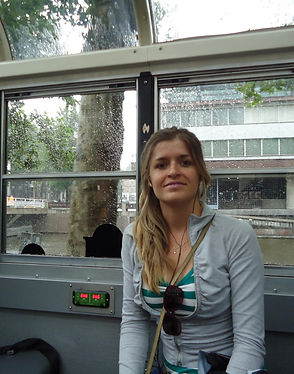
Emiliana M. Romagnoli
PhD (FAPESP fellowship)
Thesis title: Dynamics of the rumen microbiome sheep (Ovis aries) and its relationship with the degradation of biomass.
Romagnoli CV Lattes | From Feb 2013 to Apr 2016

Stalin W. S. Flores
MSc (Equador fellowship)
Dissertation title (backROOTS flag): Composition and functionality of the wild and cultivated common bean rhizosphere microbiome.
Flores CV Lattes | From August 2012 to July 2015

Clederson Ferreira
MSc (FAPESP fellowship)
Dissertation title (backROOT flag): Dynamics of the mandacaru rhizosphere microbiome in the Caatinga.
Ferreira CV Lattes | From Feb 2011 to Feb 2014

Lucas D. Lopes
MSc (CNPq fellowship)
Dissertation title (metaRUMEN flag): Sheep rumen microbiome sequencing using Ion Torrent (PGM) platform.
Lopes CV Lattes | From August 2011 to July 2013